Amazon Web Services (AWS) has officially launched the AWS Local Zone in Hanoi, marking the first AWS Local Zone in Vietnam. While much of the discussion has focused on local enterprises, the launch is equally relevant to international organizations serving users, customers, or operations in Vietnam.
It is important to clarify that the Hanoi Local Zone is not a standalone AWS Region. The Local Zone (ap-southeast-1-han-1a) is an extension of the AWS Asia Pacific (Singapore) Region (ap-southeast-1), designed to bring selected compute, storage, and networking services closer to end users.
Rather than replacing an organization's existing cloud footprint, the Hanoi Local Zone provides an additional deployment option for workloads that benefit from lower latency or require data to be stored within Vietnam.
What Services Does AWS Local Zone Hanoi Support?
According to AWS, the Hanoi Local Zone currently supports:
- Amazon EC2 (C7i, M7i, and R7i instance families)
- Amazon ECS
- Amazon EKS
- Amazon VPC
- AWS Direct Connect
- Application Load Balancer
- Amazon S3 (One Zone-IA)
- Amazon EBS and EBS Local Snapshots
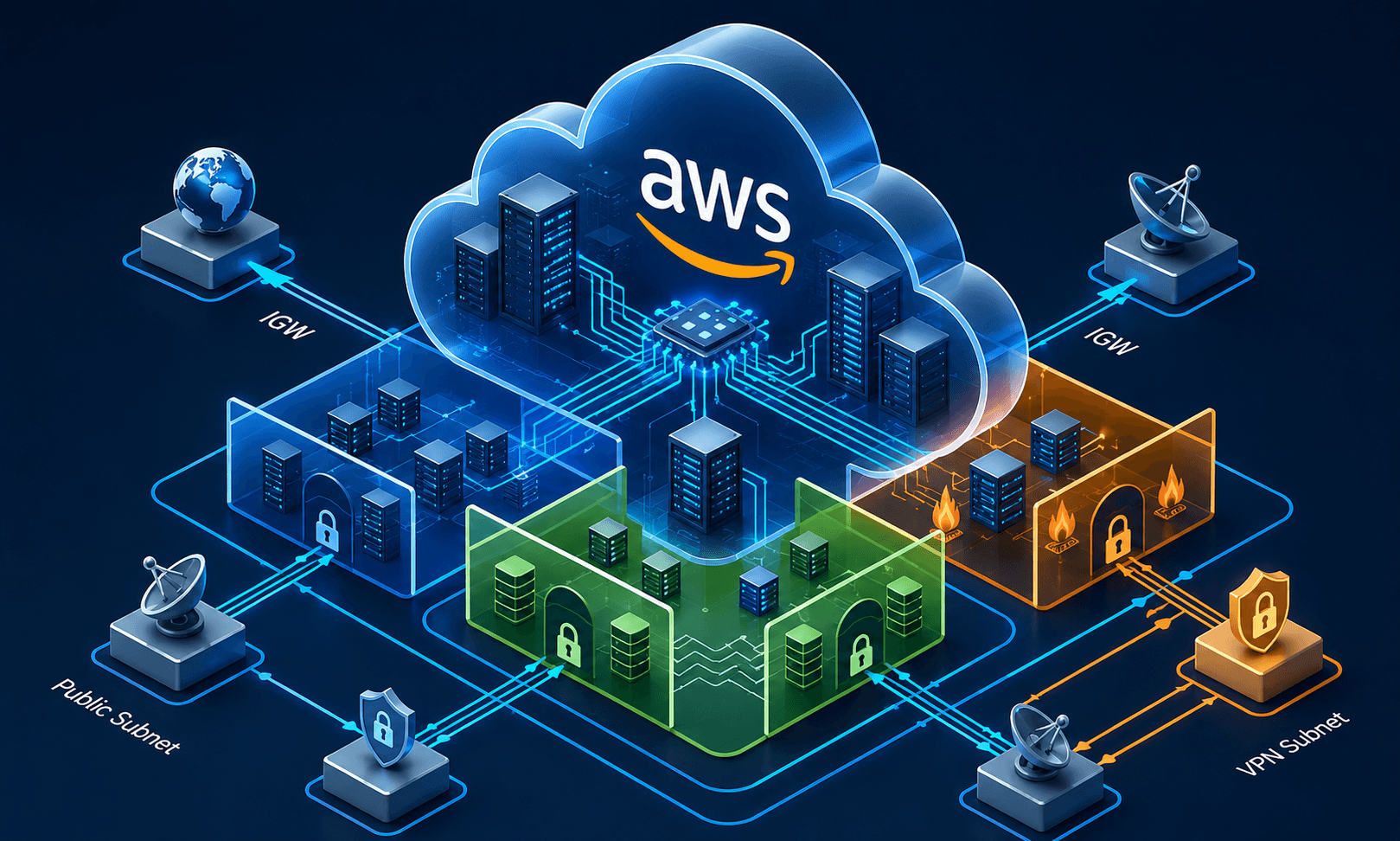
Notably, Hanoi is among the first AWS Local Zones in the Asia Pacific region to support both Amazon S3 and EBS Local Snapshots. This gives organizations additional options when designing architectures that include local data storage within Vietnam.
It is also important to understand the scope of the Local Zone. While workloads can run locally in Hanoi, many AWS services and management functions continue to operate from the Singapore Region. As a result, the Local Zone is best viewed as a complement to an existing AWS architecture rather than a replacement for a primary Region deployment.
The Core Architecture Pattern: Keep the Core, Move the Edge
For most international organizations, the value proposition of AWS Local Zone Hanoi can be summarized in a simple principle:
Keep core systems and data in the existing AWS Region, while deploying latency-sensitive and user-facing components closer to Vietnamese users in Hanoi.
This approach allows businesses to improve user experience while preserving existing operational, security, and compliance models.
How this applies in practice varies by market.
Singapore: The Most Seamless Extension
Organizations already operating in the Singapore Region have the most straightforward adoption path.
Because the Hanoi Local Zone is part of the same AWS Region, teams can extend workloads into Vietnam without introducing a separate multi-region operating model. Existing APIs, tooling, identity controls, and management processes remain familiar, reducing operational complexity.
Hong Kong and Australia: Cross-Region Hybrid Architectures
Many businesses in Hong Kong and Australia maintain customer bases, development teams, or business operations in Vietnam while running production workloads from their home regions.
For these organizations, the Hanoi Local Zone enables a hybrid architecture in which production systems and sensitive data remain in the primary Region, while web applications, APIs, containerized services, or other latency-sensitive workloads are deployed closer to users in Vietnam.
Europe: Balancing Performance and Data Governance
European organizations often operate under stringent data governance and privacy requirements.
A common architectural approach is to maintain personal data and regulated workloads within AWS Regions located in the European Union while deploying front-end services or non-sensitive application layers in Hanoi to improve responsiveness for Vietnamese users and partners.
This allows organizations to enhance user experience in Vietnam without significantly altering their existing data governance strategy.
Japan: Faster Delivery to an Established Market
Many Japanese enterprises have maintained operations, development teams, and customer relationships in Vietnam for years while running core production environments in Tokyo.
The Hanoi Local Zone provides an opportunity to keep critical systems in Japan while bringing Vietnam-facing services physically closer to local users. For organizations already operating across the Japan–Vietnam business corridor, this can be a natural evolution of existing cloud architectures.
Designing Hybrid Architectures Requires Careful Planning
Although the concept is straightforward, a cross-region hybrid architecture is not a plug-and-play deployment model.
Organizations must carefully consider:
- Network connectivity and latency between regions
- Data synchronization strategies
- Security boundaries and access controls
- Disaster recovery requirements
- Compliance obligations in both the home market and Vietnam
The effectiveness of a Local Zone deployment depends less on the infrastructure itself and more on how workloads and data are distributed across environments.
What About Vietnamese Businesses?
For organizations based in Vietnam, the benefits are equally compelling.
Applications such as e-commerce platforms, mobile applications, real-time services, media platforms, and IoT systems may benefit from lower latency when key workloads are deployed in Hanoi rather than entirely in Singapore.
In addition, Local Zone-supported services can provide new options for organizations evaluating data residency requirements within Vietnam.
As adoption continues to grow, businesses across industries are expected to evaluate how Local Zones fit into their broader cloud strategies.
The Haposoft Perspective
From Haposoft's perspective, AWS Local Zone Hanoi represents an important addition to Vietnam's cloud ecosystem and a valuable architectural option for international organizations with a presence in the country.
The key opportunity is not simply running workloads in Hanoi. The greater challenge—and value—lies in designing the right architecture: determining which components should remain in the primary Region, which workloads benefit from local deployment, and how to balance performance, operational efficiency, security, and compliance requirements.
Having worked with clients across Japan, Singapore, Hong Kong, Australia, Europe, and Vietnam, Haposoft understands both the technical considerations and the practical realities of operating across multiple jurisdictions.
As organizations evaluate the opportunities created by AWS Local Zone Hanoi, Haposoft will continue to help clients design and implement cloud architectures that align with their business objectives, technical requirements, and regulatory obligations.
Conclusion
AWS Local Zone Hanoi is not a new AWS Region, but it does provide organizations with a meaningful new deployment option in Vietnam.
For international businesses serving Vietnamese users, the Local Zone enables lower-latency experiences while allowing core systems and data to remain in existing AWS Regions. For organizations navigating both global compliance requirements and local operational needs, it offers greater architectural flexibility without requiring a complete redesign of existing cloud environments.
As cloud adoption continues to mature across Southeast Asia, AWS Local Zone Hanoi adds another valuable tool for organizations building scalable, high-performance services in Vietnam.