Circular No. 11/2026/TT-BCT The regulations issued by the Ministry of Industry and Trade on February 27, 2026, and effective from April 16, 2026, have officially established the legal framework for food traceability. With the connection to the National Traceability System set for December 1, 2026, food manufacturers have only about 7 months to review their data, processes, and technical infrastructure.
The new requirements extend beyond simply attaching QR codes or maintaining product records. Businesses need the ability to trace back raw materials, track outgoing shipments, and provide documentation upon request from competent authorities. Therefore, this article will analyze the key points of Circular 11/2026/TT-BCT and suggest ways for businesses to prepare a traceability system based on standards such as GS1 and ISO 22005.
What does Circular 11 stipulate?
Circular 11/2026/TT-BCT is not just a technical document, but also a step towards transitioning from paper-based management to digital data-driven management throughout the supply chain.
Applicable subjects and timelines to note (Articles 2 & 15)
Circular 11/2026/TT-BCT applies to organizations and individuals producing and trading food under the management of the Ministry of Industry and Trade. Two groups are exempt: imported food, which is exempt from state inspection for food safety, except in cases of warnings, and food produced by households for their own consumption, not for commercial purposes.
Businesses need to pay particular attention to two key deadlines regarding system connectivity obligations:
- From December 1st, 2026: Food production facilities must complete the connection and provide information to the National Traceability System.
- From March 1st, 2027: Food import businesses must fulfill their obligation to connect and provide data.
The remaining facilities are encouraged to connect early, but it is not yet mandatory.
The "One step forward - One step back" principle.
This is the backbone principle of the entire Circular, requiring businesses to have two-way traceability capabilities – backward tracing (one step forward) and forward tracing (one step backward). Businesses need to know where the raw materials come from and where the finished products have gone, but are not required to track the entire chain from beginning to end. For manufacturing facilities, this means that input and output data must be clearly linked. When traceability is needed, businesses must identify the raw material batch, supplier, finished product batch, and related distribution point. This allows for quick containment and handling when unsafe products are detected.
The group of business data that must be established and stored (Article 5)
Circular 11 separates information requirements according to different groups of entities, including manufacturing facilities, trading establishments, and import establishments.
- Production facilityIt is necessary to record complete information about the product (name, image, brand, batch number, expiration date, packaging specifications, ingredients), input material information (batch/lot, quantity, supplier, test results), and output distribution information (customer, agent, carrier).
- Business establishmentThey must receive and store product information from the manufacturer, and also add the location and time of the traceability event at their facility.
- Import facilityAdditional information must be provided regarding the foreign manufacturer/exporter, importer, Certificate of Origin (C/O) or test results from the country of origin, and information on the imported shipment.
Retention period and requirements for reporting incidents (Articles 6 & 7)
Regarding the retention period,This is a point businesses need to pay special attention to: traceability records must be preserved.at least 12 months from the expiration date.for food in limited quantities, or60 months (5 years) from the date of manufactureFor food products, expiration dates are not required. For businesses with thousands of SKUs, this presents a significant data storage challenge.
Furthermore, upon discovering unsafe food, the production facility must follow a five-step traceability process: accurately identifying the product batch, reviewing production and testing records, contacting the raw material supplier, sending urgent notices to distributors/dealers for recall, and preparing a report for submission to the competent authority. The business must provide traceability documentation.within 24 hourswhen requested by the competent authority.
Access codes and data carriers (Articles 12, 13)
Each traceability event must be encoded into a traceability code, including: product identifier, location code, time, batch number, or serial number. This code is affixed to the product via data carriers that the Ministry of Industry and Trade will coordinate and agree upon: barcodes, QR codes, DataMatrix, RFID, NFC, or other methods.
Important note: CircularoptionalA specific coding standard (such as GS1) is left for businesses to decide. However, the traceability code must ensure integrity, verifiability, independent traceability, and synchronous connectivity with the National Traceability System.
Inter-sectoral data sharing (Article 14)
The data retrieval system is designed to connect with national and international database systems, including those of the Ministries of Public Security, Health, Agriculture, and Environment. The data is processed on a "one-time declaration, multiple-use" principle—meaning businesses only need to submit data once, but multiple agencies can access it as needed. If data is standardized effectively from the outset, businesses can reduce duplication in declarations and work more efficiently with various regulatory agencies.
Why Should Businesses Avoid Formal Traceability?
Many businesses might think that simply creating a QR code, printing it on packaging, and directing users to a product introduction page is sufficient for traceability. While this approach may create a sense of transparency on the surface, it's insufficient to support businesses when they need to inspect, recall, or explain products to regulatory authorities. A QR code is merely...data carrierThe more important part lies in the system behind the scan code.
In practical operation, businesses need to answer more specific questions: Is product data complete? Is the batch code linked to the raw materials? Which warehouse did the finished product pass through? Which distributor was it delivered to? Where is the remaining inventory located? Can reports be quickly generated when recalls are needed? If this information remains fragmented in Excel files, paper slips, or multiple software programs that are not interconnected, then having a QR code will not help businesses with proper traceability.
|
How to make it look |
A true retrieval system |
|
The QR code directs to the product introduction landing page. |
QR codes are linked to batch codes, products, and traceability events. |
|
Data is entered manually and is fragmented across departments. |
Data is linked from ERP, MES, warehouse, and distribution systems. |
|
It is difficult to trace back problems when there are issues with materials or products. |
It is possible to trace back and forth for each batch. |
|
Reports must be compiled manually when required. |
A quick report can be generated during inspection or recall. |
Therefore, traceability should not be viewed as a superficial display on the packaging. For food businesses, it is a data-driven operational system directly related to production, testing, warehousing, distribution, and incident response. A purely formal traceability system might suffice for short-term communication, but it poses a significant risk when businesses need to prove a batch, trace back ingredients, or respond to inquiries within a short timeframe.
How should a product traceability system function?
Typical Case Study: Tracing the Origin of the SKU "180ml Pasteurized Fresh Milk"
To visualize how standards coordinate in practice, consider the operational scenario of a fresh milk SKU:
Production phase
A batch of raw fresh milk from Farm A (identified by a unique GLN) arrives at the factory warehouse. The system records the receipt event with the raw material batch code. When 5,000 liters of milk are transferred to the sterilization tank to produce 25,000 180ml milk cartons, the system automatically creates an internal link: Raw material batch ↔ Production batch LOT123. On each milk carton, the GS1 DataMatrix inkjet printer contains: GTIN (product code) + LOT123 (batch number) + Expiration date.
Incident response plan
Suppose at 8:00 AM, the QC department detects abnormal test results for lot LOT123:
08:05 — Backward Tracing:The system identifies lot LOT123 as using raw materials from Farm A, processed on shift number 2, on March 15th.
08:15 — Forward Tracing:Based on distribution event data, the system has identified 25,000 boxes of LOT123 milk currently located in 3 distribution warehouses and delivered to 15 retailers in Hanoi. The estimated number sold to consumers is 8,000 boxes.
08:30 — Issuing a selective recall order:A stop-sell and recall order has been issued.This applies only to lot 123., which does not affect other batches of milk that are circulating normally.
10:30 — Incident control:The entire retrieval and order issuance process is completed in 2.5 hours — comfortably meeting the Circular's 24-hour document submission requirement, while also helping businesses avoid large-scale recalls of all fresh milk SKUs, saving costs and protecting brand reputation.
When a problem is detected, what should the system be able to trace?
When a batch of products is detected as showing signs of being unsafe, the system must first provide support.backward tracingThis involves tracing back from the faulty batch to the production and input material data. For example, with LOT123, the business needs to know which materials were used in this batch, from which supplier, which machine shift they were processed on, and what relevant testing records are available. This step helps the business identify the cause of the risk and determine whether the problem lies in the materials, the production process, or the quality control stage.
Conversely, the system must also provide support.forward tracingThis means tracing the supply chain forward from the defective batch to the distribution points. Businesses need to know which warehouse LOT123 was shipped to, which distributor received it, the remaining quantity, and which portion may have already been sold. If the distribution data is fully recorded, businesses can quickly send out sales stop-loss notices, pinpoint the recall points, and avoid affecting unrelated batches.
This is the difference betweenselective recall and large-scale recallA good traceability system helps businesses identify the right risky batch, the right source of raw materials, and the right distribution point that needs processing. This allows businesses to reduce financial losses, shorten response times, and protect their brand reputation in sensitive food safety situations.
Where in the system should GS1 and ISO 22005 be applied?
Circular 11 does not mandate businesses to use a specific coding standard. However, for a traceability system that is stable, scalable, and easily connected to partners in the supply chain, businesses should consider widely used standards such as GS1 and ISO 22005. GS1 supports the identification and coding layers, while ISO 22005 helps businesses design traceability processes with controlled processes.
GS1 helps standardize identifiers and access codes.
Although Circular 11 does not specify a particular encryption standard, Haposoft recommends choosing GS1 as the platform for three reasons:
- International compatibility.GS1 is an identification system used in over 100 countries. If a business plans to export, a GS1-based system will ensure that traceability data is recognized in the target market without the need for conversion. Key identifiers include: GTIN (Global Trade Item Number) for products, GLN (Global Location Number) for locations, and SSCC for logistics units.
- Dynamic data on the scan code.GS1 DataMatrix allows for the direct encoding of dynamic information—lot number, production date, expiration date—into the scan code. When combined with the EPCIS (Electronic Product Code Information Services) event standard, the system can automatically record and retrieve the entire movement history of a product through each point in the supply chain.
- Meets the requirements of the Circular.GS1 natively meets the requirements for traceability codes in Clause 12 (integrity, verifiability, independent traceability, synchronous connectivity), saving businesses from having to build encryption logic from scratch.
ISO 22005 helps in designing traceability processes.
While GS1 addresses the "identification and coding" problem, ISO 22005 (Traceability in the feed and food chain) addresses the "process management" problem. This standard focuses on how to design and operate a traceability system in the food chain, including identifying traceability control points, linking internal data, and conducting periodic traceability testing.
Another important aspect is internal data linking. Businesses need to ensure the ability to trace back from a finished product unit to its corresponding raw material input batch, and vice versa. This is the technical foundation for the principle."One step forward - one step back"which the Circular requires, especially for businesses with many SKUs, multiple suppliers, and multiple distribution points.
ISO 22005 also recommends that businesses conduct periodic traceability drills, which are generally understood as mock recall. This activity helps measure actual response times, test data output capabilities, and detect system vulnerabilities before actual failures occur. If a business only designs processes on paper without testing, the system may still be slow, have missing data, or fail to retrieve the correct batch when needed.
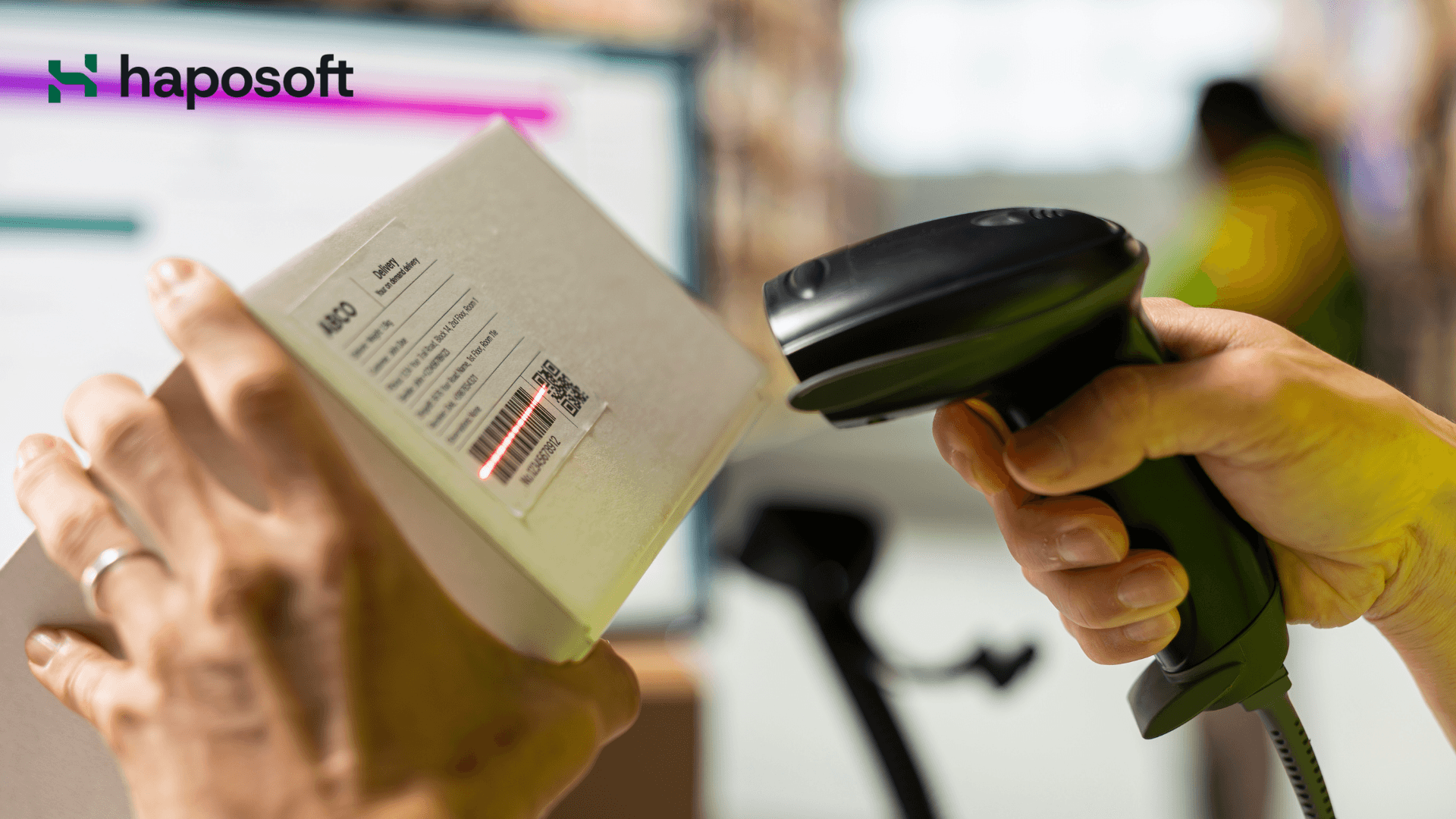
Technical Infrastructure: On-premise or Cloud?
For large-scale food businesses (thousands of SKUs, multiple factories, extensive distribution networks), choosing the right deployment infrastructure is a crucial decision.
For large-scale food businesses, especially those with thousands of SKUs, multiple factories, and extensive distribution networks, choosing the right infrastructure is a crucial decision. A traceability system not only stores product information but also processes data on raw materials, production batches, testing, warehousing, distributors, and distribution. Therefore, businesses need to weigh the pros and cons of cloud versus on-premise based on security levels, investment costs, query performance, and operational control capabilities.
Cloud is suitable for businesses that need rapid deployment and flexible scalability.
Cloud computing is suitable for businesses that want to deploy quickly, reduce initial investment costs, and do not want to operate their own server infrastructure. With this model, businesses can expand storage capacity, the number of users, or the number of access points more flexibly as the number of SKUs, shipments, and distribution points increases. Cloud computing is also convenient for businesses with multiple branches, warehouses, or operational teams in different locations.
However, businesses need to clarify issues regarding security, access control, backup, data ownership, and SLAs with their suppliers. Accessible data may include supplier information, production volume, test results, dealer lists, and distribution history. Without proper control over these aspects, a cloud system, while flexible, poses risks to data security and future audits.
On-premise is suitable for businesses that need data control and operational SLAs.
On-premise is suitable when businesses have strict data security requirements, such as dealer lists, production volumes, product formulas, or supplier data considered trade secrets. This model is also suitable if businesses need high query performance with millions of event records, or want full control over operational SLAs without relying on third-party SaaS platforms.
A key advantage of on-premise is the ability to intervene directly when problems occur. Technical teams can immediately access the server, check logs, and resolve errors without waiting for support tickets. This is especially crucial in emergency product recall scenarios, where every hour of delay can result in significant losses.
Hybrid solutions are suitable when businesses need to balance control and connectivity.
For some large businesses, a hybrid solution can strike a balance between cloud and on-premise. Core data such as recipes, testing, production, or sensitive manufacturing data can be stored on internal infrastructure. Meanwhile, dashboard layers, reports, APIs for synchronization, or connections to external systems can be deployed in the cloud.
This approach allows businesses to maintain control over critical data while having the flexibility to scale or connect with partners and regulators. In short, there isn't one right solution for every business. Cloud is suitable when rapid deployment and flexibility are prioritized; on-premise is suitable when security, performance, and control are prioritized; and hybrid is suitable when a business needs a balance of both.
Proposed Implementation Roadmap
After identifying the data requirements, traceability standards, and appropriate infrastructure model, businesses need a clear implementation roadmap before the mandatory deadline. This should not be done close to the deadline, as the traceability system needs time to review old data, standardize batch codes, integrate with existing systems, and test its responsiveness in case of problems.
Phase 1 (May–June 2026): Assessment of the current situation.Review the current production management system, identify the gap between existing data and the requirements in Article 5 of the Circular. Decide on the encoding standard (GS1 recommended) and the infrastructure for implementation.
Phase 2 (July–September 2026): System development.Deploy infrastructure, integrate with existing ERP/MES, and establish a data retrieval flow based on the "one step forward - one step backward" principle. Configure data carriers (print codes on packaging).
Phase 3 (October–November 2026): Trial operation and drills.Run the new system and the old process in parallel. Conduct mock recalls to measure response times. Conduct a test connection with the Ministry of Industry and Trade's traceability system (technical support from the Ministry will begin on October 1, 2026, as per Article 16).
Phase 4 (From December 1, 2026): Official operation.Complete the connection and provide information to the National Traceability System.
Haposoft Offers Traceability Solutions for Food Businesses
Haposoft is currently implementing a traceability solution for food businesses, focusing on building the data system behind the traceability code. The solution goes beyond simply creating QR codes to display product information; it aims to link data from raw materials, production, testing, warehousing, to distribution. This allows businesses to trace back and forth and generate reports quickly when needed for inspection or recall processing.
Haposoft can support businesses in the following key areas:
- Assess the current state of data and processes:Review product data, batch numbers, raw materials, suppliers, testing, warehousing, and distribution to identify gaps compared to traceability requirements.
- Designing the architecture of the retrieval system:Build a data model, determine access flows, and choose the appropriate infrastructure such as cloud, on-premise, or hybrid.
- Integration with ERP, MES, WMS, or internal systems:This helps prevent data fragmentation between production, warehousing, QC, and distribution.
- Build synchronized dashboards, reports, and APIs:It helps businesses track data retrieval, generate reports when needed, and readily connect with external systems.
- Support for deployment, testing, and operation after go-live:This includes system testing, data retrieval drills, data optimization, and post-deployment technical support.
For businesses needing to prepare before the December 1st, 2026 deadline, early implementation will help reduce pressure in the final stages. Haposoft can support businesses from assessing the current situation to building a practical operational system. The goal is to help businesses have a traceability solution that is sufficiently clear in terms of data, flexible in terms of technology, and sustainable for long-term use.
.png&w=1920&q=75)
Conclude
Circular 11/2026/TT-BCT makes food traceability a requirement that needs to be taken more seriously. With the deadline of December 1, 2026, food manufacturers should not simply stop at creating QR codes or maintaining fragmented records. The crucial step is to build a data system capable of linking everything from raw materials, production, testing, warehousing, and distribution.
A good traceability system helps businesses respond more quickly to incidents, track the correct batches for processing, and reduce the risk of large-scale recalls. This is not only a compliance requirement but also a foundation for businesses to control operations transparently, reduce errors, and protect their brand reputation.
With its experience in software development and system integration for businesses, Haposoft can support food businesses in building traceability solutions tailored to their specific scale. Early preparation will help businesses be more proactive before deadlines, while also creating a sustainable data foundation for long-term production and distribution operations.
→ Contact us for consultation: haposoft.com/en/contact-us